Why is Fibre Connectivity Crucial to Business Success?
Why is Fibre Connectivity Crucial to Business Success?
Many organisations view internet connectivity as just another utility bill. However, in a digital-first economy, the move from legacy copper to fibre is a strategic pivot. To understand why this shift is mandatory for growth, we have to look past the technical specifications and ask: “So what?”
Superior Speed and Scalability
Fibre is significantly faster and more scalable than copper because it uses light signals transmitted through glass strands rather than electrical pulses sent over metal wires. Because light travels faster and suffers less signal degradation, you can achieve symmetrical upload and download speeds that are hundreds of times faster than old ADSL or FTTC connections. This means you can adopt data-heavy cloud technology, such as VoIP phone systems, off-site server backups and HD video conferencing, while being confident that your internet connection can handle the load. Ultimately, this ensures your team remains productive and frustration-free, regardless of how much data the business consumes as it grows.
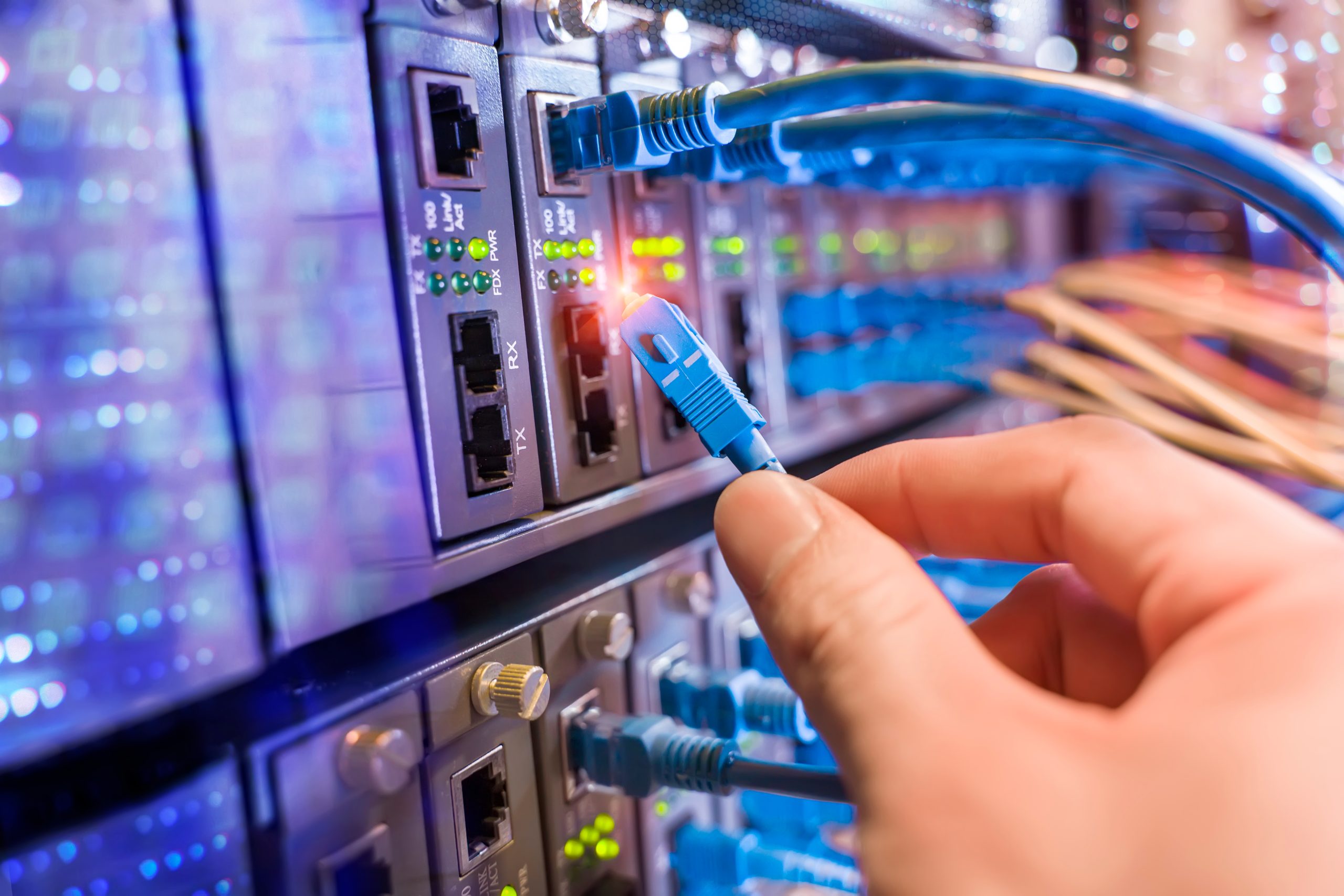
man working in network server room with fiber optic hub for digital communications and internet
Increased Infrastructure Reliability
Fibre networks have much lower failure rates than legacy infrastructure because fibre-optic cables are made of glass, making them immune to electromagnetic interference and weather-related damage. Because the hardware is more durable, your connection is far less likely to drop out or fluctuate in quality during peak business hours. By maintaining a constant connection, you eliminate the hidden costs of downtime, such as missed sales calls and lost employee hours. This allows your business to operate 24/7 with total confidence that your digital storefront and communication lines stay open.
Future-Proofing for Unified Communications
Fibre is the essential foundation for modern Unified Communications (UC) because these tools require low latency to work correctly, and fibre provides the most stable path for data to travel. Because the data travels without delay, services such as Microsoft Teams and Cloud Phone Systems work seamlessly with crystal-clear audio and no dropped frames. This stability allows your staff to work from anywhere, whether that is the office, at home or on the road, while remaining perfectly synced with the rest of the team. Consequently, you can transition to a fully flexible, hybrid work model that attracts top talent and reduces the need for expensive office overheads.
In the end, the transition to fibre is about three final outcomes. Firstly, it gives you the confidence to adopt any new technology your business needs to grow. Secondly, it protects your revenue by removing the risk of infrastructure-related downtime. Finally, it empowers a modern workforce to communicate and collaborate from anywhere without friction. Fibre is not just a faster cable; it is the engine room of a modern, scalable business.

Ready to see how fibre can transform your operations? Speak to our experts today on 0330 320 3445 or visit our website at socialcomms.uk to explore the best solution for your needs and sign up for a service that scales with your growth.