
Healthcare Telecommunications in the UK
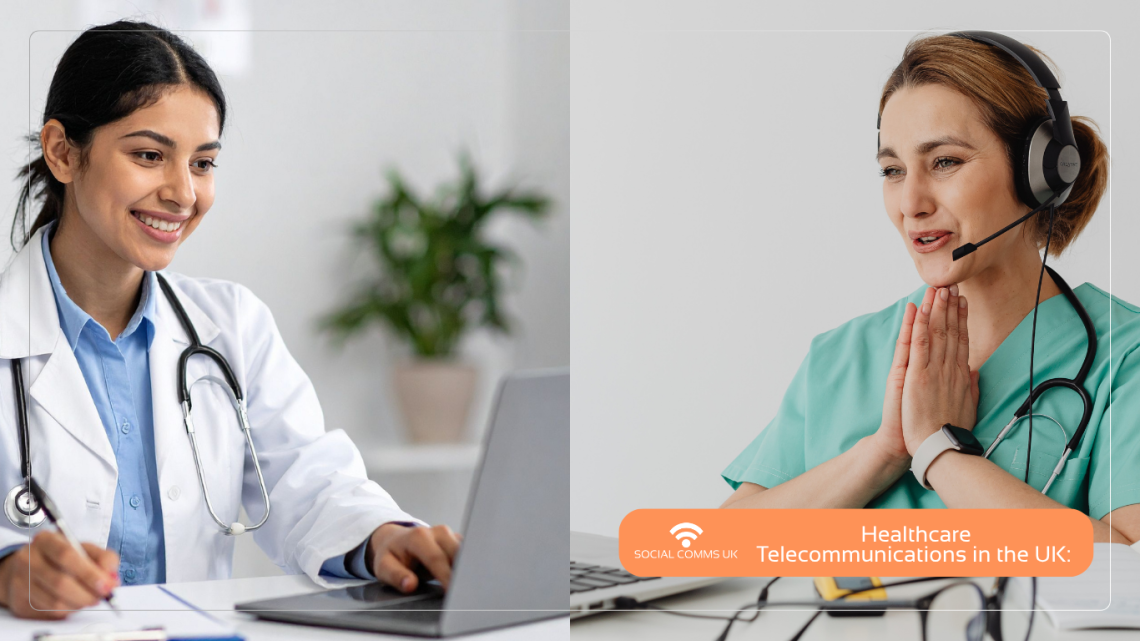
Healthcare Telecommunications in the UK: Smart Solutions for Clinics and Hospitals
Why Healthcare Telecommunications Matters for Clinics and Hospitals
In many healthcare settings today, communication breakdowns are not just inconvenient, they are costly. Missed patient calls, delayed responses, and overloaded reception lines can lead to frustrated patients, missed appointments, and unnecessary pressure on staff. In more serious cases, it can even affect patient care outcomes and reputation.
Healthcare telecommunications exists to solve these issues by ensuring every call, message, and request is handled quickly and efficiently across the entire organisation.
This is especially important in the UK healthcare environment, where rising patient demand and ongoing pressure on services mean clinics and hospitals need to do more with fewer delays and fewer resources.
The Role of Healthcare Telecommunications in Daily Operations
Healthcare facilities rely heavily on communication to keep operations running smoothly. When systems are fragmented or outdated, staff end up wasting time switching between devices, missing updates, or chasing information.
This becomes a real operational challenge for both small clinics and large hospitals:
- Small clinics often struggle with limited staff handling high call volumes
- Larger hospitals face complex coordination across multiple departments
- Patients experience longer waiting times and inconsistent communication
Healthcare telecommunications helps streamline these touchpoints so communication becomes faster, clearer, and easier to manage throughout the day.
Key Healthcare Telecommunications Solution Deployment Scenarios
Healthcare telecommunications becomes most valuable when applied in practical, real-world environments. These deployment scenarios show how systems directly improve daily operations and patient care.
Centralised Communication Systems Across Departments
In many healthcare organisations, departments often operate in silos, leading to missed or delayed information.
A centralised communication system brings everything together in one platform, allowing reception, administration, and clinical teams to stay aligned in real time.
This reduces communication gaps and helps healthcare providers:
- Respond to patient enquiries faster
- Reduce avoidable appointment delays
- Improve coordination between departments
- Prevent miscommunication that leads to service errors
Remote Consultations and Telehealth Services
With increasing demand on healthcare services in the UK, remote consultations have become an essential part of modern care delivery.
Telehealth systems allow patients to connect with healthcare professionals without needing to travel to the facility, reducing pressure on in-person services.
This helps organisations:
- Extend care access to more patients
- Reduce overcrowding in clinics and waiting rooms
- Maintain continuity of care for non-urgent cases
- Improve service efficiency during peak demand periods
Mobile Communication for Healthcare Staff
Healthcare staff are rarely stationary, and delays in communication can slow down decision-making in critical situations.
Mobile-enabled communication ensures doctors, nurses, and support staff remain connected wherever they are in the facility.
This reduces response times and supports:
- Faster coordination during emergencies
- Real-time updates between teams
- Reduced delays in patient care decisions
- Improved workflow efficiency across departments


Integration with Patient Records and Systems
When communication systems are disconnected from patient data, errors become more likely and processes take longer than necessary.
Integrating telecommunications with patient records and clinical systems ensures staff have immediate access to accurate information when they need it.
This leads to:
- Fewer administrative mistakes
- More accurate and up-to-date patient information
- Better informed clinical decisions
- Smoother patient journey from admission to discharge


Scalable Cloud-Based Healthcare Telecommunications Solutions
Healthcare demand is not static, it changes constantly based on patient volume, seasonal pressures, and public health needs.
Cloud-based systems allow healthcare organisations to scale their communication infrastructure without disruption.
This is particularly valuable because it helps:
- Support growth without major infrastructure changes
- Maintain consistent performance during high demand
- Reduce long-term operational costs
- Ensure flexibility across multiple sites or locations
How Healthcare Telecommunications Improves Patient Care and Efficiency
When communication systems are properly designed and deployed, the impact is felt across the entire organisation.
Instead of fragmented communication and delays, healthcare teams benefit from a more connected and responsive environment that supports better decision-making.
Key improvements include:
- Faster response times to patient needs
- Reduced administrative bottlenecks
- Improved coordination between clinical teams
- Higher patient satisfaction due to clearer communication
- Fewer missed appointments and follow-up gaps
In practice, this also means fewer operational inefficiencies that can otherwise lead to lost revenue and increased staff workload.
Choosing the Right Healthcare Telecommunications Setup
Not all healthcare organisations have the same needs. A small private clinic will require a different setup compared to a multi-site hospital network.
The right solution should be tailored to:
- Daily communication volume and complexity
- Integration requirements with existing systems
- Future growth and scalability needs
- Compliance and reliability expectations within UK healthcare standards
Choosing the right setup ensures communication supports operations rather than slowing them down.
The Future of Healthcare Telecommunications in the UK
The UK healthcare sector continues to face increasing demand, staffing pressure, and the need for more efficient service delivery. As a result, healthcare telecommunications is becoming more central to long-term planning.
More organisations are shifting toward integrated, cloud-based systems that support remote care, faster communication, and better data flow across departments.
This shift is driven by the need to:
- Reduce pressure on frontline services
- Improve patient access to care
- Streamline internal operations
- Deliver more responsive healthcare services
Healthcare telecommunications is no longer just a supporting tool,
it is a core part of how modern healthcare services operate. From reducing missed patient calls and improving coordination, to enabling remote consultations and scalable systems, the right deployment makes a measurable difference.
Whether in a small clinic or a large hospital, effective communication directly improves efficiency, reduces operational strain, and enhances patient care outcomes.
If your current communication system is causing delays, missed patient interactions, or operational inefficiencies, it may be costing your organisation more than you think.
Book a free consultation with Social Comms UK to identify where your current system is costing you time, money, and patient satisfaction and discover how a tailored healthcare telecommunications solution can fix it.
Contact us today: 0330 320 3445 | Email: support@socialcomms.uk
Follow us on LinkedIn: https://www.linkedin.com/company/social-comms-uk/
Follow us on TikTok: https://www.tiktok.com/@social.comms.uk
Follow us on Instagram: https://www.instagram.com/socialcommsuk/